Showing posts with label Art Tips. Show all posts

Aug 3, 2013

The 7 Deadly Sins of World Building

The sci-fi blog i09 has a great article about the mistakes writers make when building fictional worlds, and it's a good read.

If you're going to build an artificial world, you have to spend some time thinking about how it works, and what kinds of people live in it. What kinds of power sources does this world use? What is the infrastructure like? What kinds of people live there, and what do they do there?

For example this picture. Obviously an industrial society that has been around a long time and is starting to decay, with urban class warfare and a minority that feels oppressed. Standing on the rusty railing looking at this view I can smell the pungent stench of hydraulic oils, grease and pollution the air. There is the clanking sound of tools being used and dropped, huge industrial generator units, the whine of flying cars cruising by, the cursing and shouts of the denizens who work here. At the end of the day they'll go back to their tiny modular living units in the lower levels of the city.

Thinking about these things will help make the difference between a flat, non-engaging backdrop, and an engaging world your readers will lose themselves in.

Apr 22, 2013

Escape The Rut: Embrace Your Creative Side For Better Living


Falling into a rut means you are following tried-and-true but well worn steps instead of taking a chance or exploring new areas. What is the primary reason we do this?

Fear. Most people make their decisions based on some level of fear. “If I try that, I might fail.”, or “If I do this, others will think poorly of me.” or the big one: “If I take a chance, I might end up living in a van down by the river.” Fear is the biggest factor that holds people back from trying new things and fulfilling their dreams. I better not chance it; it’s just too risky.

Don’t get me wrong; we live in dire economic conditions right now. There are millions of people in this country out of work or under-employed, so there are real-world consequences to going off on a new path on a whim. The fear of losing something is the biggest hindrance to new thought processes. “I’m just trying to hold onto what I have.”

But, do not let this fear be an excuse for not stretching your mind in different directions. Take your mind off its leash from time to time and let it run free, without restrictions. In my drawing classes, the biggest challenge I see my students struggle with is their inability to let go and create spontaneously. When sketching, they hesitate, they judge themselves critically, they get frustrated when a masterpiece does not emerge right away.

This is a symptom of our society’s relentless demands for conformity and success: don’t act so weird. Watch what you say. You’re not good enough. Don’t make people feel uncomfortable. Better not say that, someone might get offended. Just keep it to yourself. You can’t do that, are you crazy?! If you can just go ahead and stay in that box, that would be grrreat, mm-kay? Thanks a bunch. 

Coupled with that is a fear of failure. Our society teaches us, constantly, that failure is shameful and to be avoided at all costs. This is why every student gets a trophy, so no one will fail. This mind-set is why innovation in business is shriveling. Newsflash: FAILURE IS PART OF LIFE. Get used to it. You will fail (and have probably failed at some point in your life in the past). Trying to avoid failure is like trying to pretend the sun won’t come up in the morning. No one gets a free pass from failure. Myself, I’ve learned more from my failures than I've ever learned from my successes. The more comfortable you are with the concept of failure, the more you’ll be able to learn from it when it happens.

Some of the greatest entrepreneurs were people who launched projects most people thought were ridiculous. When Walt Disney began building Disneyland in Anaheim it was widely derided; people called the park Walt’s Folly. Disney had setbacks and failures, but he never quit, despite what people thought. Steven Schussler, founder of the Rainforest Cafe restaurants, was so passionate about his concept he built an artificial rain forest in his house to attract investors. His house even got raided by the DEA, who thought the high energy usage meant he was growing pot. It took TWO YEARS before he attracted an investor who would give him a chance, and the rest is history. His autobiography, “It’s A Jungle In There” is an excellent read.

Here is my suggestion: take your mind off the leash and engage in some kind of creative endeavor, whether it be drawing, painting, sculpting, fixing old cars or even quilting. And when you do this, DON’T CARE. I’ll say that again: DO NOT CARE.  Get your analytic mind out of this process! It has no place here. Create without thought, without judgment, without reservation. Do not think. DO. When you do this, you will get into that special place called the ZONE, the place where you are operating on pure instinct, and your creativity is flowing almost without any conscious thought. It is in the zone where some of your best insights and ideas will emerge, because those ideas are not constrained by your fearful, logic-based restrictions. It’s a lot like meditation.

In your career or job search, this creative spirit will serve you well. You’ll come up with different angles on old problems. You’ll have a different insight than your contemporaries because you have let your mind out of its box. If you’re job searching, try something new. Do you have a skill you can profit from? Why not see if you can turn it into a business? Is there a need which is being unmet somewhere you can exploit? Find out if you can exploit it. Is there an area you've never explored because it’s too different, or “out there”? EXPLORE IT!

We’re in a new age, people. What worked yesterday will not work tomorrow. To get to someplace you've never been, you have to do something you've never done. One of the best places to start is to set aside time to unshackle your mind and let it run free. You might be surprised where it takes you.

Feb 15, 2013

Facial Expressions and Images Databases


OK, now this is very cool, and a wonderful tool for artists.

A website called the CNBC Wiki has a huge collection of different faces, male and female, from all sorts of angles, and from different ethic groups; Caucasian, African-American, multi-racial and Hispanic. There are a lot of faces to choose from, and each face is photographed from different angles, so you have a perfect study model to draw the head in various positions.

The faces are in a ZIP file; all you have to do is download the file, and then "extract" the folder to where you want it (My Pictures, for example).

Presto! Instant library of people to draw! How cool is that? The images are CC-licensed, meaning that you are free to use them in any publicly-viewable work, as long as you give credit to the CNBC Wiki website.


Myself, I'm going to use them as reference for when I have to draw crowd scenes, create new characters and improve my drawing of facial expressions.

I've said it before, and I'll say it again: assemble your own personal library of images that you can refer to for inspiration and to improve. This is one you can add to your files. Here's the link:


There are so many links and databases on this site that it can be hard to find the good stuff. Fortunately, I've done the work for you!

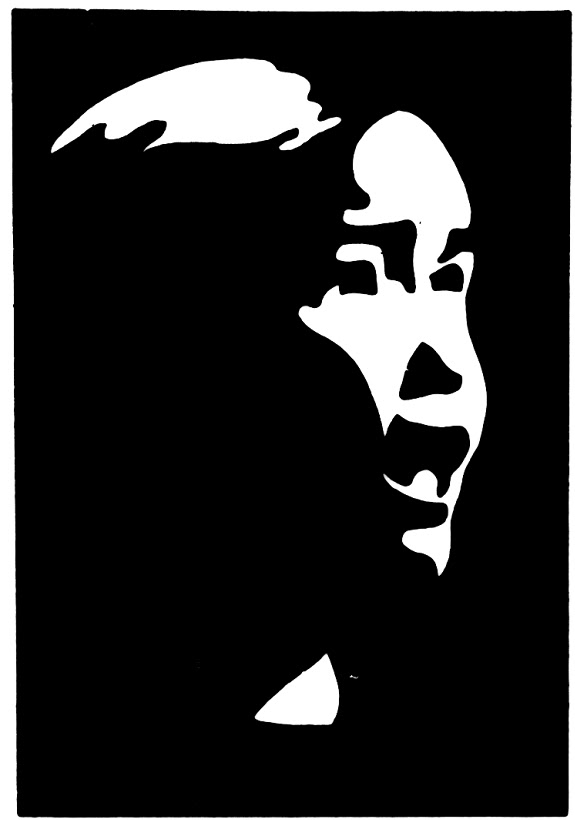
Below are some examples from a cool facial gallery of faces drawn in stark black and white, helpful for seeing what harsh shadows look like on the human face. The results are almost surreal. Here's the link to the page filled with two dimensional face databases:


There are a lot of other cool image files for your reference besides faces. The website has huge galleries of everyday objects you might have to draw someday.

If you're drawing the inside of a bathroom, kitchen or living room and need to draw common objects you'd find, you're going to need visual references to go by. Myself, I don't know how to draw a nail clipper off the top of my head; I'd have to look at one.


Fortunately, this site has you covered! The page is called BOSS, and the links to the files have not-at-all helpful names such as Non-Normatized Stimuli, but don't worry, there are tons of objects to choose from. Car keys, cameras, baseball hats, plants, jars, light bulbs, shoes, safety pins, sea shells...the list goes on. 

Do yourself a favor and download these for your visual library. Here's the link:


But WAIT! There's MORE!!


This page on the Wiki site has tons of objects that are rendered from different angles, so you are not limited to drawing the object from only one view point. How cool is that??


 Hair dryers, ash trays, lamps, umbrellas, each object has its own folder with the object seen from multiple angles. 

Click on the awnings to take you to the page, and click on The Object Databank (.zip) to download this cool database!

Jan 23, 2013

How To Create A Graphic Novel


Below is a 18 minute tutorial I created that covers the steps needed to creating your own graphic novel, everything from creating compelling characters, creating a plot and generating interest in your characters from your readers. There's a soundtrack and funky video clips to make it more fun to watch (hopefully). 

If you've been toying with the idea of creating a graphic novel, be it a two-pager or one more ambitious, this tutorial should get you started on the right track. Enjoy!

Jan 7, 2013

How To Draw Videos

Mark Crilley has a terrific series of videos that instruct viewers how to draw various objects, people, body parts and poses. Below is a fine tutorial about drawing poses. To see the full list of his drawing tutorials, click HERE.


Oct 26, 2012

Costumes On A Budget: A How-To Guide


It's Halloween! Time for costumes!

I do costuming a lot, not just on Halloween. But for a lot of people, Halloween is the only time of year they dress up in a costume, and often the biggest challenge is how to put together a costume without spending scads of money. 

A costume does not have to be elaborate; just look at the woman on the left. This is a simple costume that works: an empty picture frame, elegant dress and empty wine glass. Presto! A living painting!

I went to a Dragoncon panel this year called Costuming On A Budget and picked up some great tips for gathering materials for costumes without spending tons of money.

So here, for the low, low price of FREE, are ideas for costuming on a budget.


The first step is to either decide what costume you want to create, or find inspiration by looking at other costumes, or through the effort of gathering materials. 


For example, one costume I might put together at some point is a used car salesman.

I'll go to Goodwill, or the Salvation Army thrift stores and find the most god-awful, hideous looking suit I can find, an equally ugly tie and tacky shoes. A cheap cigar would be a nice touch as well.

Presto! I'm a sleazy, fast-talking used car salesman! This costume may cost me twenty or thirty bucks, tops, maybe even less.


"What's it gonna take to put you in this baby today?  I'm talking about a last-chance deal, and I'll hafta check with my manager on this y'understand, but if you're ready to drive her home today,  I'll throw in white wall tires,  AM radio,    windshield wipers and brand new hubcaps. So whaddya say?"


Even if you're not sure if you can use what you find but like it anyway, snag it. Organize your costume raw materials in bins, drawers or shelves, so that you have a good supply of raw materials. You never know when you can use something. 


Always be on the lookout for nifty looking objects that can be re-purposed.

For example, the accessories for my Half Life 2 Civil Protection costume included the spools from my weed whacker. The spools had an interesting pattern, so I save them when they run dry.

I go to Army/Navy stores and thrift stores a lot as well, which are also good sources of materials.

Then when I get back home, I modify, sew, paint, adjust and re-fit what I've found.


Costuming is an art; it requires imagination and creativity. Embrace yours!


So, without further ado, here are some great suggestions for costuming on a budget!


  • Make friends with local business to get reduced pricing on cast-off or surplus materials. Introduce yourself and ask if they ever throw away excess raw materials. Machine shops, plumbing supply wholesalers, tool and die companies are all good places to obtain cast off materials you can use to make costume components
  • Ask the people of Goodwill what they have that hasn't been put out on the shelves yet. Sometimes the good stuff gets snatched up as soon as it's brought out, so grab it before that happens
  • The battery panels/compartments from kids' toys make great looking components for robotic or steampunk costumes
  • Let people know you'll take their cast off appliances, clothing, toys and other unwanted items they have
  • Look for purses at thrift stores (men, I'm talking to you now). Purses have interesting buckles, fasteners and other decorative pieces that would make good costume elements
  • Used kids clothing often has interesting patterns and textures, so go through the racks at thrift stores. You can cut up the clothes to re-purpose them
  • Dumpsters can be a great place to find some interesting items for costuming, if you're willing. In fact there's a whole sub-culture of people who save scads of money by dumpster diving, so much so that they have secret places they go to. If you dumpster dive,   be safe and do the following: wear thick gloves and boots so you don't get cut, and sterilize everything you bring home immediately. There's an interesting article about dumpster diving HERE.
  • Fabric from furniture can be a fantastic source of material for costumes. If you see a couch or chair left by the curb intended to be thrown away, and you like the fabric, cut away the fabric and take it home. Make sure the fabric is not too heavily stained or soiled of course; you want to be choosy. But sometimes couches are upholstered in nicely worn leather, suede, velour and other sturdy materials. You might want to be quick about it; some people might not understand.
  • Freecycle websites are good places for costume hunting
  • Post-Halloween sales are golden opportunities to pick up costuming pieces on the cheap. The temporary stores that pop up every year to sell costumes need to get rid of all their unsold merchandise, so go and stock up
  • Barter with people to obtain materials. If you have a skill or service you can offer, see if you can trade it for something in return
  • Curb alerts through the local paper or Craigs List are good places to obtain good stuff
  • Luggage abandoned by passengers at airports can be good places to find all sorts of things. Periodically airports will auction or sell off their inventory of lost luggage. Find out when they do
  • Pawn shops are good places to obtain tools and props on the cheap. Why buy new tools when you can buy good used ones?
  • Don't scrimp on tools, however. Buy good, name brand ones. You'll be using your tools a lot, and they need to hold up. If you buy cheap tools and they either don't work, or wear out, you're not saving yourself any money. Go for the Dremels, the Craftsman and Stanley tools
  • Old clocks are great sources of metal springs and gears for steampunk costumes. More modern clocks have all plastic works, so look for older ones at thrift stores. Take them apart and salvage their inner workings
  • Old printers have interesting components that can be used for costuming, such as gears, printer heads and circuit boards
  • 2 liter soda bottles can make excellent space suit oxygen tanks. Simply spray paint them yellow, or silver, or orange, and detail with other components and presto! Air tanks!


So...what are you waiting for...?? Go out and put together a cool costume!!


Aug 15, 2012

Teaming Up With Sakura


Micron pens are the only kind of fine art pens I use. I have a bag full of them with which I draw my sketches, the graphic novel I'm working on, and everything else.

When I teach inking in my drawing classes I introduce my students to Microns, who love them as well. (full disclosure: I am not being paid by Sakura of America, which makes the pens, but they have provided me with promotional materials).

Microns can be hard to find. The channel to get them into the hands of users leaves a lot to be desired, which is too bad. They deserve to get a lot more exposure than they're receiving.

So I contacted Sakura of America, which makes them, and offered to help them promote these pens. They sent me a box of samples and giveaways, which I will be distributing during drawing demonstrations, including the upcoming Safety Harbor arts fest on the 17th. 

I am also going to try something new: I'm in the process of getting the proper licenses to sell Microns directly to my students and people who visit my tables at art shows. There will be more details on this to come, but for now I can tell you that opening up the channels of distribution for companies like Sakura will help artists and students more easily discover and acquire the tools they need to create. 

One of the things Sakura sent me was a nifty Manga drawing guide; I will be handing out these as well during my drawing demos, so be sure to come out to get one!


May 12, 2012

The Sketchbook Project

This post is about sketchbooks, specifically an innovative and very cool project called The Sketchbook Project, which is a way to share peoples' sketches and drawings with the world. 

Whether you're an artist or not, keeping a sketchbook is a fun, enriching practice, and one that does not even require you to be an accomplished artist. A sketchbook is a way to express yourself, without judgement or reservation. It is a place for your mind to run free, to unshackle your creative spirit without worrying whether what you put in it is "good enough".


Keep a sketchbook. It's good for you.


     The Sketchbook Project is a six year old project with a very cool mission, one I might participate in. For $25, anyone, artist or not, can fill out a custom sketchbook they send you, return it, and it gets added to the Brooklyn Art Library, where anyone can read through it. The project offers intimate glimpses of people all over the country, and hosts roadshows in various cities where people can see these sketchbooks for themselves. The library has roughly 12,500 sketchbooks on its shelves. For an additional fee, it will scan and digitize your sketchbook, so that anyone with an Internet connection can see what you've created. Pretty cool, huh?


To learn more about this project, click on the banner above, or HERE. This is a short video explaining The Sketchbook Project:


What do people draw in their sketchbooks? Lots of things! Memories of their childhoods, dreams of future plans, images that popped into their heads they want to explore, ideas for a comic strip, drawings of their friends or partner, or a cool building they happened to see while having that double mocha latte frappacino at Starbucks (or whatever the heck one orders there; I hate Starbucks).

The point is, there are no rules, no limits, and no judgments. That's what makes a sketchbook so liberating and special.

Keep a sketchbook. It's good for you.

I recently picked up an excellent book called An Illustrated Life, which is a book about the sketchbooks of artists. I find artists' sketchbooks utterly fascinating. The artists describe how they view their sketchbooks, their creative processes, and and how sketching helps them. Some view it as a form of therapy, others see it as a way to try out ideas and practice their art without worrying about if it's good enough or not.


I highly recommend this book. 


I have kept a sketchbook for years, and after reading this book, and seeing other artists' sketchbooks, I have started a smaller one that I take with me everywhere and sketch in almost daily. Notes, diagrams of costume ideas, funny anecdotes, you name it. Below are some sketches from an earlier sketchbook:


This is a page where I was working out how to arrange the dialogue and panels for a graphic novel I never finished. I find having this work space to figure this stuff out is very helpful and allows me to produce a higher quality page when I create pages for my graphic novel.


[click on pictures for larger size]


This is a charcoal pencil study for a painting I might do; I wanted to see if it was possible to create two worlds, one upside down, the other right side up, with a seamless joining. 


Strictly a design exercise. Note the two figures on the wall on the right, who share the same pair of eyes


Here I'm working out some random concepts to see if they will make good illustrations. Some of the best stuff you will do are doodles that you draw not caring a bit if they are good or not.

Mar 27, 2012

Writing Good Supporting Characters


The blog i09 has a great article about how to create convincing supporting characters in your stories or graphic novels.This is a good list to keep in mind when you're creating your worlds, and the people in them, so that your supporting characters are not bland background scenery.


Jan 13, 2012

Cartoons From Photographs

While working on my graphic novel about the found slides story, I needed a way to render the slides I found that made them look like cartoons, because I did not want to use the original photos; I wanted to give them an appearance consistent with the artwork but make them different enough to show that these were the photos I found (see the Found Slides, A Life Remembered section HERE)

I spent an insane amount of time drawing them on the computer using shading and brush effects, but wanted a quicker way, which is when I discovered some sites that will do this easily for free. Here are three such websites, along with examples from each (links at bottom of post).

But first, here is an example of my attempt to draw the pictures digitally, a very time consuming process.

Below is one of the found slides, on the left, and my rendered version on the right (click each picture for a larger view):


Drawing them this way took a lot of time, and didn't yield the exact results I was looking for.


Here is another picture, and some variations on what you can do on these cool websites.


This is a self portrait of Deb and I at Disney World.


Here is the same picture using the cartoon effects on Befunky:


This is one of the cartoon effects. Each effects has a sliding bar that allows you to control the intensity of each effect, to make it more abstract, or more detailed.


Here's another cartoon effect. The free version gives you some basic effects; if you want more effects, you can pay to unlock the premium effects.


The Underpainting effect on Befunky renders a nice cartoony-like look, but I needed it in black and white...


voila!


Here's the other Underpainting effect


Here's the cartoon version using Cartoon Photo, which does not have as many options as Befunky


...and here is the version from Cartoonize


Cartoonize also has some funky effects, such as creating a reflection in water effect.


I like Befunky the best, because it has the most options for customizing your photos, but try them all out for some fun effects on your pictures!


Befunky


Cartoonize


Pho.to


Oct 23, 2011

Turning a Story Into Fiction

The website Making Light has a short but very good post on turning your story into a compelling narrative: 

  1. Move and Keep Moving
  2. Make it Consequential
  3. Recycle Your Characters
  4. See If You Already Have One [prop, setting, minor character]
This is a good post and worth re-reading often as you are telling your stories. LINK

Sep 16, 2011

Links To Important Blog Posts


The Magnum Arts blog is designed to be fun and educational. Thanks for stopping by!

To make things easier to find I have assembled some of the most noteworthy blog post links below. This blog is used as a teaching supplement to the Cartooning and Drawing classes, and hopefully these posts will be interesting, inspiring and helpful.


Below is a very touching e-mail I received from a former Cartooning and Drawing student of mine. It made my week! I've been given permission to share it with you.


You might not remember me.  I only took one from you a couple of years ago in Dunedin.   Shortly thereafter, my marriage collapsed. I don't think the two were related.  :-)  One of the things I learned from the divorce is that when someone touches our life in a positive way, you need to tell them.

So  I ended up in Columbia, South Carolina after a period of turmoil.   And now that I'm settled here, I have signed up for a class in drawing at the local community college. I'm telling you all this because as a result of taking your class, I re-discovered that drawing is fun (I'm 39).  I haven't stopped since.   Part of what I learned from you is that it's ok for me tell a story with my drawing even if my drawing isn't technically perfect.  And I can look back and see that I've progressed -- a lot. 

And maybe more importantly, I'm teaching those skills to my 8 year old daughter.  Last weekend I drew out 16 basic shapes for each of us, and we sat on the couch and made each one into a face.   Then we traded and critiqued each other's work. :-)   (All positive critique, of course -- "I really like the nose on this one").  That's teaching her a number of good life skills.

So -- thank you.  The work you do makes a difference.


Wow, how cool is that..?!

Onto the links!

Dragoncon 2011 Pictures - Check out all the photos from this huge annual event!

 Dragoncon 2011 - The Artists - Links to some of the insanely talented artists I met

Dragoncon 2011 - Discussion Panels - Notes from very interesting art and writing panels

Dragoncon 2011 - The Podcast - The first Magnum Arts podcast ever, a 16 minute tour of Dragoncon, with interviews and audio taken during the event

Cartooning The Head and Figure - Printable sheets to download to help improve your skills in drawing the head and body of your characters 

Found Slides, A Life Remembered - The original slides I found in the vintage projector, along with details about the families in them, something which became a big news story and was covered by numerous TV stations

Found Slides - The Whole Story - The whole story about the found slides and the families in them, which was posted on Kodak's official corporate blog. Check it out!

The Last Text - This subject is so important I'm putting a link here. A short, jarring documentary about how texting while driving can kill you...or someone else. Definitely worth a look.

Welcome Artists - Another list of helpful blog post links to help you as an artists


Aug 28, 2011

Cartooning the Head and Figure

This is a good tutorial from an old drawing guide about cartooning the head and figure.
To open a super-sized view of each page, do the following:
  1. Right click on the page and open in new tab (or new window)
  2. Click on that image to get the huge size, perfect for printing
  3. Print. Presto! Instant tutorial on facial expressions.

You'll have a handy tutorial that will help you improve your drawing skills.